
06/04/2026 - 06/05/20268:00 AM CDT start timeLogan, West VirginiaOnline (Schedule in ET)

Farm and Ranch Income Tax/Estate and Business Planning Seminar

McEowen P.L.C. presents the two-day seminar "Farm and Ranch Income Tax/Estate and Business Planning Seminar" on Thursday, June 4, and Friday, June 5, 2026, at Chief Logan Lodge and Conference Center in Logan, West Virginia. This program is appropriate for agribusiness professionals, attorneys, certified public accountants, enrolled agents, tax practitioners, and others interested in income tax and estate/business planning issues impacting farmers, ranchers, and rural landowners.

McEowen P.L.C. is an NASBA certified CPE provider. Accountants are advised this program qualifies primarily as Group Internet Based "GIB" but will also be offered in the Group Live "GL" format. Online attendees will answer 3 questions per hour to qualify for GIB credit.

06/04/2026 - 06/05/20268:00 AM CDT start timeLogan, West VirginiaOnline (Schedule in ET)

Date

Thursday, June 4 and Friday, June 5, 2026 

Location

Chief Logan Lodge and Conference Center, Chief Logan State Park
1000 Conference Center Dr.
Logan, WV 25601

And online

Learning objectives

  • This program will provide an overview of tax law provisions relating to a variety of issues that arise in farm and ranch tax, estate, and business planning. The program assumes attendees will have an intermediate level of expertise in the area and are generally familiar with the areas of tax law addressed by the various topical areas listed in the program.
  • Attendees who complete the program will be updated as to current issues in these tax and planning practice areas. They will also work through application examples in the noted subjects areas covered by the various presenters.
  • At three points during each hour of presentation attendees will be asked to answer questions about the presentation to confirm 1) their attendance and 2) their understanding of the material as it is presented live online.

Content, prerequisites and expected participant knowledge level

This program is an overview and update on the noted areas of tax law and practice. As noted, the program is intended for participants who have an intermediate level of knowledge in the Taxes Subject Area. Beginners may find exposure to the changes that are discussed helpful in assessing whether to engage more senior practitioners to help them with a client who may have Act-related issues. There are no specific prerequisites required to attend.

No advance preparation is required though program participants may want to review the topic areas and bring questions they would like addressed during the program.

The program will be delivered online via the Zoom platform. Specific instructions and a link to access the online program will be provided several days prior to the program to individuals who register and pay the fee. Instructions will also include information about how to access program materials.

McEowen P.L.C. is an NASBA CPE provider. The program will qualify in the taxes area for the minutes noted next to each presentation.

Program materials in hard copy

All attendees will receive access to the program materials in electronic form. The link to the electronic materials will be sent via email 1-2 days prior to the event.

Attendees (in person and online) who would like hard copy of the materials may purchase them for an additional $100 as indicated on the registration form.

In person attendees: if purchased, hard copy materials will be handed out at the seminar.

Online attendees: if purchased, hard copy materials will be mailed as soon as they are available. Please note that you may not receive hard copy materials until after the seminar.

Non-Attendees can purchase program materials and will be sent to you once they are available.

Pricing will be as follows:
» $100: Hard copy
» $50: Electronic format (PDF)
» $125: Hard copy and electronic

Hard copy materials will be mailed to non-attendees as soon as they are available but may not be received until after the seminar. A download link for electronic materials will be sent after payment is received and materials have been finalized.

Kansas

Approved 16 hours (total for both days; 8 hours per day (Traditional)). Pending Online.

You must provide your correct Kansas bar number for credit to be reported.

Other jurisdictions

All other attorney attendees will receive documentation and be responsible for submitting for credit in their home state. 

Information for online attendees

This CLE will be streamed via Zoom. There is no charge to use Zoom. The link to the program will be sent to online attendees via email.

Online attendance at this program falls under the Kansas Continuing Legal Education Commission's (KSCLE) "Live programming" definition; 12 CLE credit hours may be earned through online attendance each compliance period. See Rules and Guidelines and the FAQ at the Kansas Continuing Legal Education website for more information.

Nontraditional programming limitations may vary in other jurisdictions; it is the responsibility of the attendee seeking credit to verify any limitations.

CE for IRS practice credit

Continuing education credit for Enrolled Agents (EAs) and Other Tax Return Preparers (OTRPs) will be reported to the IRS by McEowen P.L.C., an IRS Approved Education Provider.

You must provide your correct PTIN number for credit to be reported.

The program is approved for EAs and OTRPs for 5 hours of Federal Tax Law, 11 hours of Federal Tax Update. Day 1 is 8 hours of CE (3 hours of tax law and 5 hours of tax update); day 2 is 8 hours of CE (2 hours of tax law, and 6 hours of tax update).

CPE for non-IRS practice (CPAs and accountants) credit

McEowen P.L.C. is a NASBA certified CPE provider in GL and GIB (live / internet-based) formats. Kansas required this certification for online attendance credit. Please confirm your state does as well and you will receive attendance confirmation to submit after completion.

Register Here


Credit-Seeking Attendees
Paid Through Friday, May 29, 2026

» $475 - Both full days
» $310 - Single day

Paid Saturday, May 30, 2026 and After
» $525 - Both full days
» $400 - Single day


Non-Credit Seeking Attendees
Paid Through Friday, May 29, 2026

» $290 - Both full days
» $200 - Single day

Paid Saturday, May 30, 2026 and After
» $315 - Both full days
» $275 - Single day

Program fee includes materials in electronic form.

Registration Deadline: Registrations will be accepted until all seats are full. Attendees must pay the registration fee prior to start of the program. 

Lodging and dining

Attendees are responsible for making their own lodging arrangements. Continental breakfast, and lunch, are provided as part of the registration fee. Dinner is on-your-own.

Cancellations

If you cannot attend the seminar, you may send a substitute. If you cancel your registration before midnight on Wednesday, May 27, 2026, your registration fee will be refunded. After that date, non-attending registrants will receive the course materials in electronic form and be subject to a $50 cancellation fee.

The sponsors reserve the right to cancel this seminar for any reason and return all fees.

NASBA Registration

McEowen P.L.C. is certified by the National Association of State Boards of Accountancy (NASBA) as a sponsor of continuing professional education on the National Registry of CPE Sponsors. State boards of accountancy have final authority on the acceptance of individual courses for CPE credit. Complaints regarding registered sponsors may be submitted to the National Registry of CPE Sponsors through its web site: www.nasbaregistry.org.
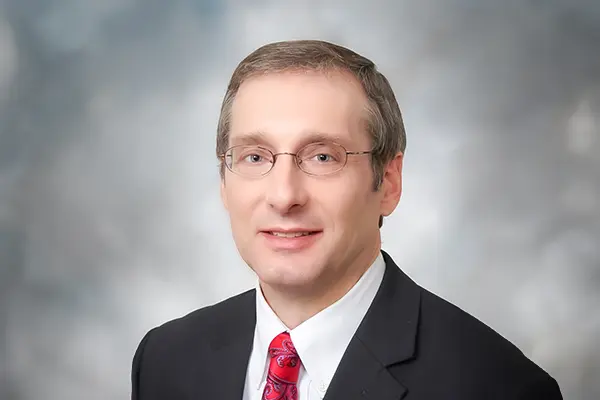
Presenters Roger McEowen

Roger McEowen

Roger McEowen, J.D., Professor of Agricultural Law and Taxation at Washburn University School of Law in Topeka, Kansas. He is a member of the Iowa and Kansas Bar Associations and is licensed to practice in Nebraska.
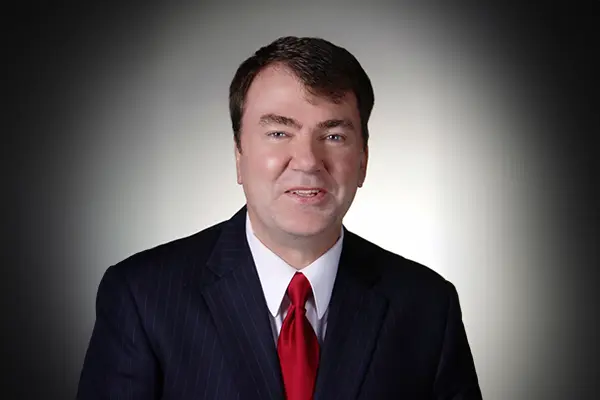
Paul Neiffer

Paul Neiffer

Paul Neiffer, CPA, is a former principal in the Agribusiness Group at Clifton Larson Allen where he specialized in income taxation and accounting services related to farmers and processors.

Schedule (Eastern Time)

NOTE: All times shown below are Eastern Time (ET); e.g., 8:00 a.m. ET = 7:00 a.m. Central Time = 6:00 a.m. Mountain Time = 5:00 a.m. Pacific Time.

7:30 a.m. – Registration and Check-In

7:55-8:00 a.m. – Introductions and Announcements

8:00-9:15 a.m. – Federal Tax Update (Roger) • [Federal Tax Update]

  • This session includes discussion of important federal tax developments from the past year concerning court cases and IRS administrative pronouncements on such issues as income and deduction items; credits and tax administration; C corporations; S corporations; partnerships; and employment taxation. 

9:15-9:40 a.m. – Rural Opportunity Zone Investments (Paul) • [Federal Tax Update]

  • When should your client ditch their IRC §1031 exchange for a Rural Opportunity Zone investment? This session compares the two deferral strategies. We’ll look at the math behind the 30% rural basis increase, the new 10-year redesignation cycle, and the critical deadlines you need to know for the 2026 tax year.

9:40-9:55 a.m. – Morning Break

9:55-10:20 a.m. – Excess (Residual) Fertilizer Supply (Update) (Paul) • [Federal Tax Update]

  • This session provides an update on claiming a deduction for residual fertilizer supply. The basic elements of qualifying for claiming the discussion will be discussed as well as current techniques being utilized by taxpayers.  This session walks the practitioner through the proper procedure for documenting and claiming the deduction on the return.

10:20-10:45 a.m. – Tax Issues for Retiring Farmers (Roger) • [Federal Tax Law]

  • This session examines the biggest threats to a farmer’s retirement "nest egg." Topics addressed will be depreciation recapture on machinery and equipment; s.e. tax implications of rental arrangements; strategic use of CRTs; basis implications; new charitable deduction rules; and the ability to spread land sale gains over four years.

10:45-11:35 a.m. – Farm Income Averaging – Nuts and Bolts and Advanced Planning (Paul) • [Federal Tax Law]

  • Effective farm income averaging requires more than just filling out a form; it requires a multi-year tactical vision. This session dives deep into the "advanced planning" side of Schedule J. We will analyze complex scenarios involving S-Corp shareholder wages, Form 4797 gains, and the often-misunderstood rules regarding share-rent landlords. With the OBBBA changes, we’ll discuss how to coordinate averaging with the new Senior Deduction and $15M Estate Exemption. Attendees will leave with a mastery of "Elected Farm Income" optimization to ensure no lower-tier tax bracket goes to waste.

11:35 a.m.-Noon – The "Infinite Banking" Mirage (Roger) • [Federal Tax Law]

  • Is the "Private Bank" pitch a legitimate liquidity tool or a one-way ticket to an IRS audit? This session cuts through the hype to reveal the technical risks for farm S-Corps. We will analyze the IRC §264 interest disallowance rules, the danger of "constructive distributions," and how the OBBBA changes the math on alternative financing. Learn why moving farm money in a circle to manufacture interest deductions often backfires and walk away with a checklist to identify "Modified Endowment Contracts" (MECs) before they trigger a tax disaster.

Noon-12:45 p.m. – Luncheon

12:45-1:35 p.m. – Accounting Method Changes - the When, How and Why to File a Form 3115 (Paul) • [Federal Tax Update]

  • The OBBBA has introduced permanent changes to 100 percent bonus depreciation and the IRC §199A deduction, making your choice of accounting method more impactful than ever. This session dives into the "why" of filing Form 3115 in 2026. We will explore advanced planning opportunities, such as changing inventory valuation methods (from cost to farm-price) to manage the OBBBA's new income thresholds and leveraging the small business retroactivity election for R&E expenses. Discover how a well-timed accounting method change can "unlock" deductions that would otherwise be lost, providing your farm clients with immediate cash flow relief.

1:35-2:00 p.m. – Timber Sale Tax Issues (Roger) • [Federal Tax Law]

  • How timber is sold matters just as much as what is grown. This session breaks down the "counterintuitive" world of timber taxation, specifically the I.R.C. § 631(b) "pay-as-cut" rules that guarantee capital gains treatment for business owners. We’ll also demystify the I.R.C. §631(a) election for landowners who harvest their own wood, showing you how to split your income between capital gains and ordinary income to maximize the OBBBA’s new lower tax brackets. In 25 minutes, you’ll learn the "golden rules" of timber contracts to ensure your harvest results in a refund, not a red flag.

2:00-2:25 p.m. – Installment Sale Issues Dealing with Partnership’s Hot Assets and Liquidation of an S corporation (Paul) • [Federal Tax Law]

  • In this session we will review how to handle the taxation of hot assets from a partnership that includes an installment sale. S corporations are required to report a gain when liquidating, however utilizing an installment sale may allow this gain to be postponed to the shareholders. This session will also review some other issues dealing with installment sales.

2:25-2:45 p.m. – Afternoon Break

2:45-4:00 p.m. – Potpourri (Roger and Paul) • [Federal Tax Update]

  • During this "grab bag" session we will look at recurring tax issues for farmers and ranchers. Each issue will be a key one for farm clients and the topics will be current up-to-the minute as of the time of the seminar. Some topics will include an update on Section 45Z; guidance on what crop insurance and FSA programs that can be deferred; Commodity gifting to kids and charity, etc.

4:00 p.m. – Adjourn

NOTE: All times shown below are Eastern Time (MT); e.g., 8:00 a.m. ET = 7:00 a.m. Central Time = 6:00 a.m. Mountain Time = 5:00 a.m. Pacific Time.

7:30 a.m. – Registration and Check-In

7:55-8:00 a.m. – Introductions and announcements

8:00-9:15 a.m. – Federal Estate and Gift Tax Update (Roger) • [Federal Tax Update]

  • This session includes discussion of important federal estate and gift tax developments from the past year concerning court cases and IRS administrative pronouncements on such issues involving gross estate calculations and deductions; retirement plans; trusts; and miscellaneous matters.

9:15-9:40 a.m. – Manager-Managed LLCs – Where Do We Stand on This? (Paul) • [Federal Tax Law]

  • Is your client’s "limited partner" status a valid tax shield or an IRS target? This "lightning" session cuts through the confusion surrounding I.R.C. §1402(a)(13). We will examine the current 2026 state of play for manager-managed LLCs, focusing on the high-stakes battle between the IRS’s "service provider" theory and the Fifth Circuit's new pro-taxpayer ruling. Walk away with a 5-point checklist to determine if your client’s LLC structure will hold up under the new 2026 scrutiny and when it's time to pivot to an S-Corp instead.

9:40-9:55 a.m. – Morning Break

9:55-10:20 a.m. – Public Benefit Corporation – What is it and Where Does it Fit? (Paul) • [Federal Tax Update]

  • Should your niche farm be an LLC or a Public Benefit Corporation? This 25-minute showdown compares the two most popular structures for the 2026 tax year. We will dive into the OBBBA's updated I.R.C. §179 limits and how they apply to PBCs, the fiduciary protections for mission-driven directors, and the simplified reporting rules for small-scale benefit entities. Leave with a clear understanding of how to align your farm’s legal "bones" with its social and environmental goals without sacrificing tax efficiency.

10:20-10:45 a.m. – Navigating 2026 Tax and Policy Strategies for Farmers and Ranchers (Roger) • [Federal Tax Update]

  • The OBBBA has fundamentally re-engineered the agricultural landscape for 2026 and beyond. By removing the "sunset" uncertainty of previous law, making key Tax Cuts and Jobs Act (TCJA) provisions permanent and expanding the farm “safety net.”  This session will look at how these OBBBA features can be strategized, including the first-ever alignment of the ARC and SCO programs.

10:45-Noon – FSA Updates after OBBBA (Paul) • [Federal Tax Update]

  • The OBBBA didn't just raise the baseline payment limit from $125,000 to $155,000; it fundamentally changed how we calculate eligibility. In this session we cover the technical "nuts and bolts" of the OBBBA's attribution rules. Topics include the new inflation indexing for Title I payments, the removal of payment caps for EQIP and CSP, and the critical 2026 verification process. Learn how to assist your clients with the updated CCC-941 filings and how the 10-year "Beginning Farmer" extension opens new doors for increased subsidy rates.

Noon-12:45 p.m. – Luncheon

12:45-1:35 p.m. – Leveraging IRC § 743(b): A Dual Strategy for Basis Step-Up and Estate Tax Mitigation (Roger) • [Federal Tax Law]  

  • How can an heir afford to buy out siblings or pay down farm debt? The answer often lies in the tax savings generated by I.R.C, §743(b). This session focuses on the "succession math" of the I.R.C. §754 election. We’ll discuss why the OBBBA’s restoration of 100% bonus depreciation makes the I.R.C. §743(b) adjustment the most powerful financing tool in the farm transition toolkit. Learn how to structure LLC and Partnership buyouts to maximize the new "qualified production property" incentive and how to avoid the "mandatory adjustment" traps for partnerships with substantial built-in losses.

1:35-2:00 p.m. – Why Portability May Not Be the Correct Option for Younger Farmers (Paul) • [Federal Tax Update]

  • We tend to think that portability is the correct option for increasing the lifetime exemption amount for the surviving spouse. However, for younger farmers with substantial assets, utilizing a credit shelter trust may be much better than portability. We will review some of the key numbers to determine which each makes the most sense.

2:00-2:25 p.m. – Top Five Legal (& tax) Issues That Farmers Don’t Think About, But Should (Roger) • [Federal Tax Law]

  • In the wake of the OBBBA, many agricultural producers have fallen into a state of "tax complacency." While the OBBBA provided permanent relief in several areas, it simultaneously created new regulatory traps and shifted long-standing legal standards. This session moves beyond the headlines to address the high-stakes issues that are often overlooked in the daily rush of farm management.

2:25-2:45 – Afternoon Break

2:45-4:00 p.m. – Potpourri (Roger and Paul) • [Federal Tax Update]

  • This session provides an analysis of key points concerning estate and business planning for farm and ranch clients in 2026; converting a farming C corporation to an S corporation; long-term care tax issues; how much of a farm NOL can be carried back; cash balance plans for deferred grain, etc.

4:00 p.m. – Adjourn